I used to combat middle school ennui by visiting the library in search of occult lore. Instead I found several slim and cheaply printed black volumes detailing paranormal findings from the seventies or eighties. The series didn't attempt to be anything but investigative children's books, but at the time I found the black and white photos in the middle of each book remarkable. Some of the photographs took a lot of imagination to see anything unusual, but the ample light leaks and distortions in the shots kept me awake at night wondering.
I can't recall the titles nor can I recall the publisher. But I remember taking these books with me everywhere. What I gleaned in those pages was paramount, more so than the offensive and seemingly perpetual arithmetic forced my way in the classroom. Though written for children, these books leant me the foundation for what my interests would develop into over the years. Today I'm much more interested in statting the supernatural than finding it in my backyard with a flashlight.
But thats not to say these books don't still inspire my campaign design. I remember one of the books detailed the witch's mark, a common trope for use in myth and metaphor. But I like the idea enough that I'm applying it to the Cult of Aois Lychomancer. Every Lychomancer has a bite-shaped scar somewhere on his body. The origin stories vary, but every legend acknowledges that the scar runs deep through the flesh to pierce the soul.
Apparently like a legal stamp it binds a pact between the Lychomancer and his patron -- the Devil Wolf. But only Lychomancers know the truth. Some of these scars are easily concealable, others less so. But Lychomancers hide these scars desperately. Even the rumor of possessing such a scar will certainly summon harassment from local law-abiding authorities. Every Moon Lychomancer's scar is a luminous white. Every Sanctity Lychomancer's scar is a dull black. Besides a slight variation in scent, these scars are the only discernable physical difference between Moon and Sanctity werewolves.
Showing posts with label Dungeons and Dragons. Show all posts
Showing posts with label Dungeons and Dragons. Show all posts
Sunday, July 22, 2012

Friday, July 20, 2012
Lychomancy Magic: The King's Way
I recommend starting with part one, and then reading part two if you haven't already.
 Lychomancy is not merely a way of life. The tenants provide spells and bonuses, but most importantly they secure the Lychomancer's sanity. They keep the Lychomancer from destroying friends and loved ones. Lychomancy is an aberrant magic from an inconspicuous origin, so practitioners tend to be the desperately curious or those well adjusted to violence. There are of course Lychomancers who disdain the paths. But these damned souls live in brooding solitude with scarcely any humanity left at all.
Sanctity magic is called "The King's Way." To resist accidental frenzy against allies during demon form, every Sanctity Lychomancer must internally recite the mantra, "Walk lightly in the shade. Turn your eye from the moon so you may gaze inward." Magic is difficult to cast during demon form due to the mantra.
Sanctity Spell:
The Curse
Level: Lychomancer 1
Duration: Extended
Range: Melee attack
This is damnation in spell craft. The Lychomancer may declare this spell during a successful bite attack. The Lycomancer sacrifices a daily turning of demon form and rolls 1d3 on the table. Only three targets may be subject to the effects of The Curse per night. If a target is slain, the effects end and the spell may be cast additionally that night.
1. Target takes penalty to all attacks against the Lychomancer equal to the Lychomancer's level for 2d3 turns. The Lycomancer also gains an additional permanent +1 (during d6 roll) for tracking the target by smell.
2. Target takes penalty to all attacks against the Lychomancer equal to the Lychomancer's level + WIS modifier for 2d3 turns. Also, the target must make a will save, if unsuccessful, the target has till dawn to find the cure. If the will save succeeds, the target may pass the curse to an innocent before dawn instead of finding the cure.*
3. In addition to the effects of "2," the Lychomancer may add his WIS modifier to the duration of turns. Also, the target must make a will save, if successful, the target has 24 hours to find the cure. If the target fails to save, the curse manifests immediately.*
* Wolfsbane alchemically combined with the blood of the Lychomancer caster provides the cure. If it is not taken in time the afflicted target transforms into a "wolf knight." These wolf knight's maintain their intelligences but become utterly savage agents of chaos. They seek out the Lychomancer who transformed him and serve as retainers who seek only food and companionship as payment.
Even if a target had the opportunity to transfer the curse, they likely wouldn't know to do it. But to transfer the curse, the afflicted just needs to bite an innocent. In doing so, the curse will manifest in the innocent instead. A Lychomancer may only have one "wolf knight" per level + WIS modifier (maximum 3). Unscrupulous Lychomancers may choose to sacrifice wolf knights to empower the effects of the transformation table. Every sacrificed "wolf knight" adds a +2 bonus to the die roll on that table.
After the window of treatment passes, only the death of the casting Lychomancer can permanently transform the cursed target back to original form and mind.
Moon magic will be covered in upcoming posts.
 Lychomancy is not merely a way of life. The tenants provide spells and bonuses, but most importantly they secure the Lychomancer's sanity. They keep the Lychomancer from destroying friends and loved ones. Lychomancy is an aberrant magic from an inconspicuous origin, so practitioners tend to be the desperately curious or those well adjusted to violence. There are of course Lychomancers who disdain the paths. But these damned souls live in brooding solitude with scarcely any humanity left at all.
Sanctity magic is called "The King's Way." To resist accidental frenzy against allies during demon form, every Sanctity Lychomancer must internally recite the mantra, "Walk lightly in the shade. Turn your eye from the moon so you may gaze inward." Magic is difficult to cast during demon form due to the mantra.
Sanctity Spell:
The Curse
Level: Lychomancer 1
Duration: Extended
Range: Melee attack
This is damnation in spell craft. The Lychomancer may declare this spell during a successful bite attack. The Lycomancer sacrifices a daily turning of demon form and rolls 1d3 on the table. Only three targets may be subject to the effects of The Curse per night. If a target is slain, the effects end and the spell may be cast additionally that night.
1. Target takes penalty to all attacks against the Lychomancer equal to the Lychomancer's level for 2d3 turns. The Lycomancer also gains an additional permanent +1 (during d6 roll) for tracking the target by smell.
2. Target takes penalty to all attacks against the Lychomancer equal to the Lychomancer's level + WIS modifier for 2d3 turns. Also, the target must make a will save, if unsuccessful, the target has till dawn to find the cure. If the will save succeeds, the target may pass the curse to an innocent before dawn instead of finding the cure.*
3. In addition to the effects of "2," the Lychomancer may add his WIS modifier to the duration of turns. Also, the target must make a will save, if successful, the target has 24 hours to find the cure. If the target fails to save, the curse manifests immediately.*
* Wolfsbane alchemically combined with the blood of the Lychomancer caster provides the cure. If it is not taken in time the afflicted target transforms into a "wolf knight." These wolf knight's maintain their intelligences but become utterly savage agents of chaos. They seek out the Lychomancer who transformed him and serve as retainers who seek only food and companionship as payment.
Even if a target had the opportunity to transfer the curse, they likely wouldn't know to do it. But to transfer the curse, the afflicted just needs to bite an innocent. In doing so, the curse will manifest in the innocent instead. A Lychomancer may only have one "wolf knight" per level + WIS modifier (maximum 3). Unscrupulous Lychomancers may choose to sacrifice wolf knights to empower the effects of the transformation table. Every sacrificed "wolf knight" adds a +2 bonus to the die roll on that table.
After the window of treatment passes, only the death of the casting Lychomancer can permanently transform the cursed target back to original form and mind.
Moon magic will be covered in upcoming posts.
Thursday, July 19, 2012
Lychomancy Transformation
Read Part one.
I think the Lychomancer tone I'm going for fits particularly well with Dungeon Crawl Classics. I've decided to write up a "Transformation Table" in the Style of DCC. This table modifies the Lychomancer's forms so roll on this table when the Lychomancer transforms. Roll 1d6 when transforming into beast form. Roll 1d20 when transforming into demon form. Note that once the demon form is activated, the Lychomancer must make a will save to attempt any action besides a melee strike (or a move towards a melee strike). Failure might indicate an attack on an ally instead!

Add one's level and WIS modifier to the roll. But a natural 1 on a d20 counts as a 1. CON and WIS may be burned to heighten the effects. Burned points recover at the rate of a magic user's recovery time. The beast form may be rerolled at the start of every encounter (The higher value may be chosen. It just takes the Lychomancer a little while for the moon to energize him). The demon form must be rerolled every time it is utilized. But re-roll if the value is lower than the Beast form's total value. A transformation grants all the benefits on the table up to (and including) the value of the roll.
I'm not really sure how well the Lychomancer will balance with the other classes. The Lychomancer is perhaps best suited to fulfilling an antagonistic NPC role. I'll allow the Lychomancer as a PC class in my game, but I'm sure I'll be tweaking it as the campaign churns on.
TRANSFORMATION TABLE
1. Flight over fight in beast form; gain x1.25 speed. DEX becomes 15 (unless it was already higher). In addition the Lychomancer's human form takes on a permanent lupine feature (tail, pointy wolf-ears, nocturnal eyes, etc). Enough of these features eliminates the human form until the Lychomancer only has the beast and demon forms.
2. Leap attack. Like a charge but without the AC penalty on the following turn. If the attack hits, deal an additional +1d6 "slam" damage (modified by STR).
3. Bite and claw attacks add double strength modifier damage to hit rolls.
4. Howl; -1 to enemy morale on failed will save.
5. Gain five temporary HP with resistances*
6. Gain six temporary HP with resistances*
7. Can verbally speak to and understand animals. Gain seven temporary HP with resistances*
8. Gain eight temporary HP with resistances*
9. Gain nine temporary HP with resistances*
10. Gain x1.5 speed. Gain ten temporary HP with resistances*
11. Leap attack (as above) but +1d8 "slam" damage (modified by STR)
12. May make a bite AND claw attack in addition to normal attacks.
13. Howl; -2 to enemy morale on failed will save. Furthermore, enemies subject to the effects of the howl cannot move for 1d3 rounds.
14. May cast spells in demon form without making a will save.
15. Gain x2 speed. Gain 15 temporary HP*
16. When a Lychomancer slays an enemy in demon form, an adjacent enemy must make an immediate will save or flee with a chance of dropping any held weapons.
17. Either a bite or claw attack may be rolled with 1d6 damage every attack (as opposed to 1d4).
18. Claw & bite attacks crit on a natural 18.
19. Every killing blow by the Lychomaner in an encounter grants a cumulative +1 bonus to attacks till the end of the encounter. The maximum bonus is equal to the Lychomancer's level.
20. Killing blows grant temp HP equal to damage dealt*
21. Black Pact; can telepathically communicate with any predator within line of sight at will. The predator is "friendly" once the psychic bond is instated.
22. Gain 18 temporary HP*
23. Bite and claw attacks crit on a natural 17.
24. Shadow Leap; Lychomancer may teleport from shadow to shadow within line of sight as a move action. This might allow for truly absurd leap attacks**
25. Gain 20 temporary HP*
26. Bite and claw attacks crit on a natural 16.
27. Savage Sight; Lychomancer see through any predator's eyes w/ in 100 miles.
28. Gain 22 temporary HP*
29. Bite and claw attacks crit on a natural 15.
30. Immortal moon; cannot die on the night of a full moon. These effects persist even after the demon form is shed (till dawn). Once reduced to to 1 HP the Lychomancer disintegrates into shadows and is dispersed. On the following dawn the Lychomancer will return to human form in the wilderness fully healed and rested (as though at least 24 hours had passed). If the Lychomancer is ever reduced to this shadow state, he will never age but may ONLY subsist on sentient flesh***
* These temporary HP with resistances take damage before non-temporary hit points. These hit points last as long as the form (that called for the roll) remains active. Temporary HP recovers in beast form after a short rest or short bout of non-strenuous activity. Regular HP heals as normal. The resistances work differently depending on the chosen Road. These temporary HP only take half damage from most attacks (round damage down). But silver weapons instead deal full damage to followers of the Road of Moon. Holy weapons deal full damage to followers of the Road of Sanctity.
Note: Alternatively the temporary HP might instead convert a number of already existing hit points to a resistant status (without granting extra HP). This would still allow the Lychomancer a significant measure of protection. I will probably use this tweak for players in Cult of Aois who choose to play werewolf characters.
** I owe this ability to the 3rd edition "Shadowdancer" prestige class.
*** DCC's Hound of Hirot is the premier inspiration for this power.
Part three will begin to cover Lychomancer spells.
I think the Lychomancer tone I'm going for fits particularly well with Dungeon Crawl Classics. I've decided to write up a "Transformation Table" in the Style of DCC. This table modifies the Lychomancer's forms so roll on this table when the Lychomancer transforms. Roll 1d6 when transforming into beast form. Roll 1d20 when transforming into demon form. Note that once the demon form is activated, the Lychomancer must make a will save to attempt any action besides a melee strike (or a move towards a melee strike). Failure might indicate an attack on an ally instead!

Add one's level and WIS modifier to the roll. But a natural 1 on a d20 counts as a 1. CON and WIS may be burned to heighten the effects. Burned points recover at the rate of a magic user's recovery time. The beast form may be rerolled at the start of every encounter (The higher value may be chosen. It just takes the Lychomancer a little while for the moon to energize him). The demon form must be rerolled every time it is utilized. But re-roll if the value is lower than the Beast form's total value. A transformation grants all the benefits on the table up to (and including) the value of the roll.
I'm not really sure how well the Lychomancer will balance with the other classes. The Lychomancer is perhaps best suited to fulfilling an antagonistic NPC role. I'll allow the Lychomancer as a PC class in my game, but I'm sure I'll be tweaking it as the campaign churns on.
TRANSFORMATION TABLE
1. Flight over fight in beast form; gain x1.25 speed. DEX becomes 15 (unless it was already higher). In addition the Lychomancer's human form takes on a permanent lupine feature (tail, pointy wolf-ears, nocturnal eyes, etc). Enough of these features eliminates the human form until the Lychomancer only has the beast and demon forms.
2. Leap attack. Like a charge but without the AC penalty on the following turn. If the attack hits, deal an additional +1d6 "slam" damage (modified by STR).
3. Bite and claw attacks add double strength modifier damage to hit rolls.
4. Howl; -1 to enemy morale on failed will save.
5. Gain five temporary HP with resistances*
6. Gain six temporary HP with resistances*
7. Can verbally speak to and understand animals. Gain seven temporary HP with resistances*
8. Gain eight temporary HP with resistances*
9. Gain nine temporary HP with resistances*
10. Gain x1.5 speed. Gain ten temporary HP with resistances*
11. Leap attack (as above) but +1d8 "slam" damage (modified by STR)
12. May make a bite AND claw attack in addition to normal attacks.
13. Howl; -2 to enemy morale on failed will save. Furthermore, enemies subject to the effects of the howl cannot move for 1d3 rounds.
14. May cast spells in demon form without making a will save.
15. Gain x2 speed. Gain 15 temporary HP*
16. When a Lychomancer slays an enemy in demon form, an adjacent enemy must make an immediate will save or flee with a chance of dropping any held weapons.
17. Either a bite or claw attack may be rolled with 1d6 damage every attack (as opposed to 1d4).
18. Claw & bite attacks crit on a natural 18.
19. Every killing blow by the Lychomaner in an encounter grants a cumulative +1 bonus to attacks till the end of the encounter. The maximum bonus is equal to the Lychomancer's level.
20. Killing blows grant temp HP equal to damage dealt*
21. Black Pact; can telepathically communicate with any predator within line of sight at will. The predator is "friendly" once the psychic bond is instated.
22. Gain 18 temporary HP*
23. Bite and claw attacks crit on a natural 17.
24. Shadow Leap; Lychomancer may teleport from shadow to shadow within line of sight as a move action. This might allow for truly absurd leap attacks**
25. Gain 20 temporary HP*
26. Bite and claw attacks crit on a natural 16.
27. Savage Sight; Lychomancer see through any predator's eyes w/ in 100 miles.
28. Gain 22 temporary HP*
29. Bite and claw attacks crit on a natural 15.
30. Immortal moon; cannot die on the night of a full moon. These effects persist even after the demon form is shed (till dawn). Once reduced to to 1 HP the Lychomancer disintegrates into shadows and is dispersed. On the following dawn the Lychomancer will return to human form in the wilderness fully healed and rested (as though at least 24 hours had passed). If the Lychomancer is ever reduced to this shadow state, he will never age but may ONLY subsist on sentient flesh***
* These temporary HP with resistances take damage before non-temporary hit points. These hit points last as long as the form (that called for the roll) remains active. Temporary HP recovers in beast form after a short rest or short bout of non-strenuous activity. Regular HP heals as normal. The resistances work differently depending on the chosen Road. These temporary HP only take half damage from most attacks (round damage down). But silver weapons instead deal full damage to followers of the Road of Moon. Holy weapons deal full damage to followers of the Road of Sanctity.
Note: Alternatively the temporary HP might instead convert a number of already existing hit points to a resistant status (without granting extra HP). This would still allow the Lychomancer a significant measure of protection. I will probably use this tweak for players in Cult of Aois who choose to play werewolf characters.
** I owe this ability to the 3rd edition "Shadowdancer" prestige class.
*** DCC's Hound of Hirot is the premier inspiration for this power.
Part three will begin to cover Lychomancer spells.
Tuesday, July 17, 2012
The Lychomancer
The variant of werewolves in Cult of Aois is the Lychomancer.
Requirements: 12 STR, 12 CON, 12 WIS
Prime Requisites: CON, WIS
Hit Die: D8
Attacks/Saves/Experience Chart: as cleric
Weapons/Armor: weapons as fighter, armor is leather or lighter.
The Path of Lychomancy is abhorred by civil society. Lychomancers are walkers of the wilds, savages in darkness, and callous warlocks. Well, so say the legends at least. Those who know better call them werewolves or skin changers. The ignorant know them only as wolf demons of hunger. While the Lychomancer shares some spells with the cleric, the Lychomancer is barred from many cleric spells and abilities (at the DM's discretion). Lychomancers have a few unique spells in their repertoire, but may never turn or command undead. Additionally, Lychomancers cannot be lawful of any variation.

Instead of heavy armor proficiency, the Lychomancer may only wear skins of the creatures he has hunted himself for armor. The Lychomancer may assume a "demon form" a number of times per day equal to the Lychomancer's level. A point of luck may be spent to fuel an additional demon form use per day. Generous DM's will add a character's wisdom modifier to the number of changes per day, as well. Once transformed, the Lychomancer remains in the form so long as he is currently endangered or a danger is perceived to be eminent. The transformation happens immediately as a free action in a grotesque and noisy fashion.
Unfortunately inside the demon form there is an unquenchable hatred and rage. Allies within the vicinity of a demon formed Lychomancer are subject to his agression if absolute restraint is not exercised. Once started, the rage is carried with an immense momentum. The Lychomancer may direct his rage, but he must rage still. In order to not rend his allies limb from limb, the Lychomancer must choose a sacred Road and follow its tenants well. But on a full moon, sometimes even the tenants cannot quell the lunar madness.
The Road of Sanctity:
1. Eat every kill.
2. Protect the wilds.
3. Advise the Pack.
>Hide/Move Silently on a 1-3 of a d6 (dex mods apply)
Track on a 1-3 on a d6 (wis mods apply)
An additional +1[-1] Armor Class
Access to Sanctity spell list.
The Road of Moon:
1. Never abandon a hunt.
2. Destroy law.
3. Protect the pack.
>Track on a 1-3 on a d6 (wis mods apply)
Hide/Move Silently on a 1-3 of a d6 (dex mods apply)
An additional +1 Attack Bonus
Access to Moon spell list.
*The benefits of the chosen Road persist while the the Lychomancer is in any form. Only if a committed tenant is broken will the Lychomancer lose the benefits.
So long as the Lychomancer maintains his chaotic status he may assume a "beast [aka wolfman] form." He most easily casts spells in beast form and gains a static 15 strength while beast form is assumed (unless already higher). This 15 STR carries over into Demon form as well. The beast or demon formed Lychomancer may also make an additional bite or claw attack for 1d4 damage every turn if he has a free hand/ or face to do so.
The Lychomancer's appearance is horrific in the beast and demon forms, so the DM might want to apply penalties or bonuses to social situations while the Lychomancer is transformed. But even in human form, Lychomancers smell fear, which might grant a bonus in circumstances involving intimidation or lie detection. Like magic users, Lychomancers are particularly at risk for their bodies becoming Lychanids.
Part two details the Lychomancer's transformations.
Requirements: 12 STR, 12 CON, 12 WIS
Prime Requisites: CON, WIS
Hit Die: D8
Attacks/Saves/Experience Chart: as cleric
Weapons/Armor: weapons as fighter, armor is leather or lighter.
The Path of Lychomancy is abhorred by civil society. Lychomancers are walkers of the wilds, savages in darkness, and callous warlocks. Well, so say the legends at least. Those who know better call them werewolves or skin changers. The ignorant know them only as wolf demons of hunger. While the Lychomancer shares some spells with the cleric, the Lychomancer is barred from many cleric spells and abilities (at the DM's discretion). Lychomancers have a few unique spells in their repertoire, but may never turn or command undead. Additionally, Lychomancers cannot be lawful of any variation.

Instead of heavy armor proficiency, the Lychomancer may only wear skins of the creatures he has hunted himself for armor. The Lychomancer may assume a "demon form" a number of times per day equal to the Lychomancer's level. A point of luck may be spent to fuel an additional demon form use per day. Generous DM's will add a character's wisdom modifier to the number of changes per day, as well. Once transformed, the Lychomancer remains in the form so long as he is currently endangered or a danger is perceived to be eminent. The transformation happens immediately as a free action in a grotesque and noisy fashion.
Unfortunately inside the demon form there is an unquenchable hatred and rage. Allies within the vicinity of a demon formed Lychomancer are subject to his agression if absolute restraint is not exercised. Once started, the rage is carried with an immense momentum. The Lychomancer may direct his rage, but he must rage still. In order to not rend his allies limb from limb, the Lychomancer must choose a sacred Road and follow its tenants well. But on a full moon, sometimes even the tenants cannot quell the lunar madness.
The Road of Sanctity:
1. Eat every kill.
2. Protect the wilds.
3. Advise the Pack.
>Hide/Move Silently on a 1-3 of a d6 (dex mods apply)
Track on a 1-3 on a d6 (wis mods apply)
An additional +1[-1] Armor Class
Access to Sanctity spell list.
The Road of Moon:
1. Never abandon a hunt.
2. Destroy law.
3. Protect the pack.
>Track on a 1-3 on a d6 (wis mods apply)
Hide/Move Silently on a 1-3 of a d6 (dex mods apply)
An additional +1 Attack Bonus
Access to Moon spell list.
*The benefits of the chosen Road persist while the the Lychomancer is in any form. Only if a committed tenant is broken will the Lychomancer lose the benefits.
So long as the Lychomancer maintains his chaotic status he may assume a "beast [aka wolfman] form." He most easily casts spells in beast form and gains a static 15 strength while beast form is assumed (unless already higher). This 15 STR carries over into Demon form as well. The beast or demon formed Lychomancer may also make an additional bite or claw attack for 1d4 damage every turn if he has a free hand/ or face to do so.
The Lychomancer's appearance is horrific in the beast and demon forms, so the DM might want to apply penalties or bonuses to social situations while the Lychomancer is transformed. But even in human form, Lychomancers smell fear, which might grant a bonus in circumstances involving intimidation or lie detection. Like magic users, Lychomancers are particularly at risk for their bodies becoming Lychanids.
Part two details the Lychomancer's transformations.
Monday, July 16, 2012
Lychanid
Corpses tainted by the reserves of arcane energy might rise again as undead abominations known as Lychanids. Lychanid's were almost unanimously fallen adventurers, and are only encountered in the most depraved and isolated depths. Some dungeons are so damned, so infested by malevolent will, that a demon might attempt to claim not simply a mortal's soul, but his body too.


Magic-users can offer their bodies to a demonic patron in exchange for avoiding the afterlife. Only the most desperate souls would be willing to ask such a price, because it incurs an eternity as an incorporeal ghost. The magic user must beg for mercy in his final breath at which point his soul is ejected from his body. The soul must be bound to whatever place, person, object, or entity means most to the dying character in their moment of death -- the body being the only exception.
The dying and soulless body is then immediately rejuvenated by dark magics and occupied by the demonic patron. A rapid process of evolution occurs at which point the magic-user's sold body transforms to fit the visage of the patron. To clarify, the soul of the magic-user is a ghost, so when I refer to "Lychanid" I am referring to the magic-user's sold body now occupied by the demon.
The ejected magic-user can still cast spells as in life, but cannot level, nor can he easily control or communicate with whatever he is bound to. To adult mortals the magic-user ghost is entirely invisible and silent. Only in the most exceptional circumstances (burning stats as in DCC) can the magic-user exert enough will to communicate (either telepathically or in a wraith like wail). This is the only physical action a ghost magic user may take.
The ghost magic user never gains back spent attributes. Once a stat is brought to zero the ghost dissipates to whatever incalculable fate awaits. Only through an external excommunication cast on his captive body can a magic-user hope to re-enter his body. Worse yet -- if the demon possessed body is slain, the magic-user's ghost is bound bodiless for eternity.
Sunday, July 15, 2012
RIP Jareth, Devotee of Orcus
*Spoiler Warning*
Even if a player makes all the right choices, the die gods care little for the affairs of mortals. Goodman Games' Doom of the Savage Kings module promised to be deadly, and for Jareth it was. I can't claim this to be an adequate review of the module because I modified the dungeon significantly to fit the scheme of my home-brew campaign. But for the purposes of this article, I will discuss only the aspects I drew from the module without getting into my custom content.
 But I will say that Doom of the Savage Kings is easily adapted. I had no problem sculpting the content to fit my overarching ACKS sandbox. I've never really been one to run modules. I prefer to plan just the exoskeleton of my own adventures. My players are rather unpredictable, so extensive planning usually ends up as a waste of time (Gotta love players who keep a DM on his toes). But this module proved to be well worth the prep time.
Gauging the reactions of my players, they seemed to find DCC's serpent infested ghouls far more intimidating (and deadly) than the centrally antagonistic demonic Hound of Hirot. As I mentioned -- the dice gods didn't favor Jareth during the session. After burning stats to fend off the hound in a spectacular display of arcane might, the already wounded Jareth was slain by a snake infested ghoul perched in a high and shadowy alcove.
Doom of the Savage Kings provides everything I want in a dungeon; mythic treasures, bizarre monsters, the necessity of true strategy, and above all, peril. As Jareth's death was the first death in the campaign, the other characters certainly seemed sobered from their bloodlusts. It's a real feat to actually scare your friends at the game table as a DM, but I think this module gets as close as it gets in DnD.
If you manage to get your hands on Doom of the Savage Kings I would certainly recommend running it, or at the very least mining it for ideas. After reading through the module I'm really considering converting my campaign to DCC once the PC's hit level two -- if only to test out the system fully.
Even if a player makes all the right choices, the die gods care little for the affairs of mortals. Goodman Games' Doom of the Savage Kings module promised to be deadly, and for Jareth it was. I can't claim this to be an adequate review of the module because I modified the dungeon significantly to fit the scheme of my home-brew campaign. But for the purposes of this article, I will discuss only the aspects I drew from the module without getting into my custom content.

Gauging the reactions of my players, they seemed to find DCC's serpent infested ghouls far more intimidating (and deadly) than the centrally antagonistic demonic Hound of Hirot. As I mentioned -- the dice gods didn't favor Jareth during the session. After burning stats to fend off the hound in a spectacular display of arcane might, the already wounded Jareth was slain by a snake infested ghoul perched in a high and shadowy alcove.
Doom of the Savage Kings provides everything I want in a dungeon; mythic treasures, bizarre monsters, the necessity of true strategy, and above all, peril. As Jareth's death was the first death in the campaign, the other characters certainly seemed sobered from their bloodlusts. It's a real feat to actually scare your friends at the game table as a DM, but I think this module gets as close as it gets in DnD.
If you manage to get your hands on Doom of the Savage Kings I would certainly recommend running it, or at the very least mining it for ideas. After reading through the module I'm really considering converting my campaign to DCC once the PC's hit level two -- if only to test out the system fully.
Wednesday, June 13, 2012
Cult of Aois III
Osvald the assassin was lost again to turbulent dreaming. Again he found himself hiding in a nightmare; the very dungeon the heroes are delving into. Every night this assassin found himself hiding from the Ogre while it sang it's vile rituals to summon the dead. Were these the souls the assassin had sent to death? But one night the assassin saw Faylor burst into the room to challenge the Ogre, and so took the chance to escape.
In the attempt, the assassin was slain by the scything bones of the Ogre's skeleton guardians. In his dying breath the assassin begged for life, and a demon of these cursed halls whispered back. The assassin did not pass on. Instead he was transformed into a spirit of shadow and jealous hunger. He realized then, that he would never wake from this. I used the Wizards' World 'vampire' class as an inspiration, although I plan to modify the model significantly.

Faylor was desperate to defeat the ogre and so opened the black chest. Faylor found that for him -- the price of opening resulted in the obliteration of his connection to magic. Thus forth Faylor walked the caves as an explorer not a mage (the player wanted to change classes without sacrificing his character's backstory). But the trauma of the transforming experience knocked Faylor unconscious. In the chest, Luukol found black barnacled spear wrapped in seaweed. In the chest Aever found a shield with a gargoyle's mein carved into the front. Luukol and Aever desperately held back the ogre, but only until Faylor regained his senses, at which point the heroes retreated.

The ogre's elvish accomplice claimed to be the ogre's prisoner not its ally. Faylor was particularly distrusting of the elf, but Aever managed to convince the party to allow the mysterious elf at least a weapon for defense. A spring bubbled beneath the stairs, forming a river which fell in quiet waterfalls from an open-top plateau. To the south a decrepit outpost winds further into the depths. To the north a massive kiln in the shape of a helmet sits outside a door. The door is at the base of a cliff face with numerous winding caves in the lofty heights. Listening behind the door, Jareth heard the goblin tongue.
Tuesday, May 29, 2012
What Shelob Taught Me
*THE TWO TOWERS BOOK SPOILERS HEREIN*

Perhaps this is why 'magic items' have become such a staple in most iterations of the classic game. The 'Phial of Galadriel' as well as the elven forged 'Sting' are essential to Sam's survival against the psuedo-mythic spider-demon, Shelob. Even a hobbit of Sam's resolve couldn't survive against such a threat without the aid of supernatural means. And though victorious, the battle left Sam exhausted to his absolute capacity in enemy territory.
Both in DnD and LotR, magic items don't substitute hard-won experience. But they do provide the necessary edge to perhaps offer survival in an otherwise impossible encounter. Because all low level encounters are potentially lethal, every decision must be made with the absolute strategic proficiency to prevent untimely character deaths.
Because magic is limited in LotR as it is in DnD -- low level players/ characters are desperate for creative solutions. Sam's seemingly counter-intuitive assault from beneath was just the unexpected strategy he needed to wound the beast. In all likelihood Sam would have been killed had he not eventually driven the beast away with the elvish phial's light.
Oddly the turning of Shelob seemed akin to the DnD cleric's 'turn undead' ability. And yet arguably Sam's first strike is comparable to a thief's 'sneak attack.' Of course, as treasure equates experience, perhaps it's not quite fair to rate Sam and Frodo as low level.
Indeed both have remarkable elvish gifts as well as the Ring of Power. But even if Tolkien's texts dont seamlessly translate into the DnD experience, the influence is sufficient enough that I personally enjoy 'low level' DnD more than the advanced levels. For me, low level character-growth is more palpable and satisfying.
A friend (Faylor's player) had just finished J.R.R. Tolkien's The Two Towers and expressed that the reason the book is so fulfilling is because it satisfies a desire for both "high" and "low level" adventure. I thought for a while about what he meant -- the more I did, the more I agreed with him.

Whenever I witness a particularly mighty character in fiction my first question always is, 'how did he/she get that way?' In one chapter of The Two Towers readers witness powerful heroes capable of dreadful slaughter. But the reader witnesses the separate and pitiable trudge of the remaining fellowship in the very next chapter. But most interesting to me, is the transition or 'leveling' the hobbits undergo.
I've been thinking about how Tolkien's telling of Sam's battle against Shelob informed the original designs of Gygax and Arneson. The hobbits are 'low level' in comparison to the rest of the fellowship. As such they must rely more on guile than force to accomplish their goals. Sneaking past a few orcs is a feat, but slaying a monster as vile as Shelob is an altogether more epic challenge. Such would take much grit and careful cunning.Perhaps this is why 'magic items' have become such a staple in most iterations of the classic game. The 'Phial of Galadriel' as well as the elven forged 'Sting' are essential to Sam's survival against the psuedo-mythic spider-demon, Shelob. Even a hobbit of Sam's resolve couldn't survive against such a threat without the aid of supernatural means. And though victorious, the battle left Sam exhausted to his absolute capacity in enemy territory.
Both in DnD and LotR, magic items don't substitute hard-won experience. But they do provide the necessary edge to perhaps offer survival in an otherwise impossible encounter. Because all low level encounters are potentially lethal, every decision must be made with the absolute strategic proficiency to prevent untimely character deaths.
Because magic is limited in LotR as it is in DnD -- low level players/ characters are desperate for creative solutions. Sam's seemingly counter-intuitive assault from beneath was just the unexpected strategy he needed to wound the beast. In all likelihood Sam would have been killed had he not eventually driven the beast away with the elvish phial's light.
Oddly the turning of Shelob seemed akin to the DnD cleric's 'turn undead' ability. And yet arguably Sam's first strike is comparable to a thief's 'sneak attack.' Of course, as treasure equates experience, perhaps it's not quite fair to rate Sam and Frodo as low level.
Indeed both have remarkable elvish gifts as well as the Ring of Power. But even if Tolkien's texts dont seamlessly translate into the DnD experience, the influence is sufficient enough that I personally enjoy 'low level' DnD more than the advanced levels. For me, low level character-growth is more palpable and satisfying.
Friday, May 25, 2012
Cult of Aois II
Read Part I first.
The giant spiders assaulting the heroes were borrowed from Greg Gillespie's Barrowmaze megadungeon. I chose these spiders due to Gillespie's "Blood-Thirsty" quality. Blood-thirsty monsters catch the scent of a PC's open wound and converge to attack the injured target en masse. These are particularly brutal monsters in low level play because hit points are precariously low.
The heroes rolled well for initiative and managed to swiftly kill the spiders with a few well aimed bolts before the blood-thirsty quality could come into play. The heroes noticed that these spiders had white scars that ran like streams (a divergence from Gillespie's design) over their faces and heads. The heroes don't know what these scars are from, but they will probably find out in a deeper level of the dungeon.

Skeletons were waiting silently behind the door to the north. These undead stood in formation in the claustrophobic hall that turned at a right angle behind them into the unknown. The heroes had a hard time hitting, let alone pushing through these restless foes. Luukol managed to turn the undead while Aever stood vigilantly between the dead and the living. The skeletons fled into the darkness and the heroes carefully followed.
Around the corner the heroes found a door with it's arch labelled, "Confessional." The heroes walked into the 10 by 15 room and saw that a screen had been slashed to ribbons in the east. Another room stood behind the ruined screen -- this is where the skeletons were assumed to have run. The heroes looted tapestries off the western and the northern walls before moving into the next room. Hamish, the party's hireling torchbearer was convinced to carry the loot. He didn't complain, he'd been asked to do worse things before...
 The other side of the confessional screen displayed a room with much the same parameters as the last. But instead of tapestries lining the walls, delicate and ancient tomes crowded the walls. These books contain a history of the demon Orcus as well as the "summon" spell as it appears in James Raggi's LotFP Grindhouse Edition. A door to the south stood ajar. While the heroes tore through the books, Aever noticed the approach of skeletons from the southern door.
Using door-cover, Aever managed to brutally hack the lead skeleton away from the doorway. But even this did little to slow them, so Luukol was forced to unleash his darker aspect. He did not 'turn' the undead but chose instead to 'command' them to destroy each other. Once the bone dust settled, the heroes were able to move through the short hall the skeletons had been standing in.
The hall led to a grand eastern door. Inside the heroes found a mausoleum; four stone caskets rested in each corner of the room. From here, the heroes could hear a guttural and unholy song coming from behind a fine dark-wood door to the south of the room. A massive onyx chest sat in the center of the room. A door stood ajar to the east. A lot started to happen very quickly.
Jareth used his ten foot pole to lift the lid of the chest. Inside he found his first familiar, a fox sent on Orcus' behalf. Faylor could stand the singing no more so he kicked open the southern door, tossed in a torch, and strode into the room. Inside he saw a massive chamber held up by classical pillars. Trampled scrolls and relic boxes littered the floor in a pattern of refuse mingling with a pile of corpses. A female elf stood silent beside an ogre who was chanting the vile ritual at the top of a staircase inside a humming magical circle.

Skeletons rose from the pile of dead and made their move towards Faylor who cast 'sleep' before retreating from the room. The elf fell unconscious in the circle, but the ogre stood unfazed. At the door the heroes did their best to brace the door against the skeletons, but the Ogre charged the door himself to see who was on the other side. The party managed to bloody his nose with bolt and missile, but they will be in real danger when he crosses the threshold.
Once Jareth got sight of the ogre he fled, backtracking the route the party had made. Stumbling with the treasure and his hireling, Jareth ran into the half-dwarf the party had had terrified the day prior. Jareth tried to calm the mysterious half-dwarf, but succeeded only in startling him further. Jareth caught the half-dwarf's axe in the eye, falling into a well of dreams drank by his demon patron.
Read Part III.
The giant spiders assaulting the heroes were borrowed from Greg Gillespie's Barrowmaze megadungeon. I chose these spiders due to Gillespie's "Blood-Thirsty" quality. Blood-thirsty monsters catch the scent of a PC's open wound and converge to attack the injured target en masse. These are particularly brutal monsters in low level play because hit points are precariously low.
The heroes rolled well for initiative and managed to swiftly kill the spiders with a few well aimed bolts before the blood-thirsty quality could come into play. The heroes noticed that these spiders had white scars that ran like streams (a divergence from Gillespie's design) over their faces and heads. The heroes don't know what these scars are from, but they will probably find out in a deeper level of the dungeon.

Skeletons were waiting silently behind the door to the north. These undead stood in formation in the claustrophobic hall that turned at a right angle behind them into the unknown. The heroes had a hard time hitting, let alone pushing through these restless foes. Luukol managed to turn the undead while Aever stood vigilantly between the dead and the living. The skeletons fled into the darkness and the heroes carefully followed.
Around the corner the heroes found a door with it's arch labelled, "Confessional." The heroes walked into the 10 by 15 room and saw that a screen had been slashed to ribbons in the east. Another room stood behind the ruined screen -- this is where the skeletons were assumed to have run. The heroes looted tapestries off the western and the northern walls before moving into the next room. Hamish, the party's hireling torchbearer was convinced to carry the loot. He didn't complain, he'd been asked to do worse things before...

Using door-cover, Aever managed to brutally hack the lead skeleton away from the doorway. But even this did little to slow them, so Luukol was forced to unleash his darker aspect. He did not 'turn' the undead but chose instead to 'command' them to destroy each other. Once the bone dust settled, the heroes were able to move through the short hall the skeletons had been standing in.
The hall led to a grand eastern door. Inside the heroes found a mausoleum; four stone caskets rested in each corner of the room. From here, the heroes could hear a guttural and unholy song coming from behind a fine dark-wood door to the south of the room. A massive onyx chest sat in the center of the room. A door stood ajar to the east. A lot started to happen very quickly.
Jareth used his ten foot pole to lift the lid of the chest. Inside he found his first familiar, a fox sent on Orcus' behalf. Faylor could stand the singing no more so he kicked open the southern door, tossed in a torch, and strode into the room. Inside he saw a massive chamber held up by classical pillars. Trampled scrolls and relic boxes littered the floor in a pattern of refuse mingling with a pile of corpses. A female elf stood silent beside an ogre who was chanting the vile ritual at the top of a staircase inside a humming magical circle.

Skeletons rose from the pile of dead and made their move towards Faylor who cast 'sleep' before retreating from the room. The elf fell unconscious in the circle, but the ogre stood unfazed. At the door the heroes did their best to brace the door against the skeletons, but the Ogre charged the door himself to see who was on the other side. The party managed to bloody his nose with bolt and missile, but they will be in real danger when he crosses the threshold.
Once Jareth got sight of the ogre he fled, backtracking the route the party had made. Stumbling with the treasure and his hireling, Jareth ran into the half-dwarf the party had had terrified the day prior. Jareth tried to calm the mysterious half-dwarf, but succeeded only in startling him further. Jareth caught the half-dwarf's axe in the eye, falling into a well of dreams drank by his demon patron.
Read Part III.
Thursday, May 24, 2012
Today is the Day
Sign up for DnD Next play-testing here. Whether you are waiting anxiously for, are perturbed by, or indifferent to 5th Edition DnD, it is finally open to the general public. At Pax East there was some open play-testing (I believe) on Friday night. Unfortunately I missed testing by a few hours. I have faith that WotC will finish a worthy new edition even if this preliminary draft doesn't indicate that. In all likelihood I will mine the new edition for elements that I enjoy and will implement them into my home-brew. I doubt that I will use the new edition as a main source, because even now I don't think there is a DnD tome I use primarily over the others. I might arrive on a favorite one day, but I'm in no rush.
Tuesday, May 22, 2012
Cult of Aois I
The first session started pretty gonzo -- the players were blinded/ teleported by a magical sandstorm. They wandered through the desert looking for their destination but instead found a statue erected to "the god-killer" overlooking a jagged valley. Almost as soon as they got their bearings they were attacked. Depraved madmen in tattered priestly robes emerged from the biting winds gibbering in tongues and lashing long obsidian daggers.
The players were still feeling out the system so perhaps this ambush was a bit unfair. But now the players are fully aware of how desperate low level play is. A henchman had died, two heroes had fallen unconscious, and some of the trader's wares had been ruined. Paraphrasing Luukol, the group's cleric, "We are at 60% strength and havent even walked into the dungeon." But I'm not a malicious DM, no, of course not. I offered the players a risky power grab just outside the dungeon gate to make up for the gritty start.

A ram-horned 14 foot tall demon in hell-forged plate armor offered the players a pact. This demon presented himself as Orcus and told the players that those madmen were his unworthy thralls. In exchange for the players' worship, he would grant them a blessing in his halls. Two of the players responded with fervent piety, out of fear or greed I do not know. Others responded with guarded and not-so-guarded suspicion. The demon vanished into the sandstorm leaving the players with a lot of uncertainties. The heroes know that this demon's tunnel can lead to the dwarven city, but all else is speculation and rumor.
In the dungeon's antechamber the players found a half-dwarf entranced or stunned, but the players managed to terrify him away from any sort of allegiance. He had actually just been attacked moments before the heroes arrived, but saw the heroes as another threat. Dwarves are the only lawful race in these depths, all others are either neutral or chaotic generally. The half-dwarf fled, but could not be pursued far in the darkness. Once down into the actual depths, the players found themselves in a claustrophobic armory-turned rusting trash heap.
At one time this dungeon was a sacred barrack for the dwarven people, crafted by the finest artisans in pious worship of Aois. Aois was the famed demi-god bard who slew the selfish pantheon, freeing the dwarven people from their divine debts. While the dwarven faith in Aois was real the dwarves lived near the surface but never lost a war to the beastmen. After Aois ascended becoming a god himself, the dwarves' grip on the surface caves became a tenuous one. They retreated ever lower, building their mausoleum citadels in worship of cthonic demons instead. Orcus was once the demon prince, but the dwarves stole his staff through unknown trickery, greatly reducing his power and outcasting him from their new pantheon. If the players read the books they found in the second session, they will learn this.
The heroes came across two doors, but opted for the one without the sound of dripping water behind it. The passage opened to to a hall with a collapsed staue defaced beyond recognition to the north. A door to the west opened upon a long "L" shaped hall lined on both sides by flying buttresses. Altars to various crumbling idols had been erected in alcoves by the beastmen after they had torn these halls from the dwarves. I was going for a holy warrior vibe hence the religious iconography and the remnants of long past battle. Thick gossamer webs flooded the room but the heroes pressed on, that is until the sound of skittering above warned them to draw their blades. Part II begins in medias res.
Read Part II.
The players were still feeling out the system so perhaps this ambush was a bit unfair. But now the players are fully aware of how desperate low level play is. A henchman had died, two heroes had fallen unconscious, and some of the trader's wares had been ruined. Paraphrasing Luukol, the group's cleric, "We are at 60% strength and havent even walked into the dungeon." But I'm not a malicious DM, no, of course not. I offered the players a risky power grab just outside the dungeon gate to make up for the gritty start.

A ram-horned 14 foot tall demon in hell-forged plate armor offered the players a pact. This demon presented himself as Orcus and told the players that those madmen were his unworthy thralls. In exchange for the players' worship, he would grant them a blessing in his halls. Two of the players responded with fervent piety, out of fear or greed I do not know. Others responded with guarded and not-so-guarded suspicion. The demon vanished into the sandstorm leaving the players with a lot of uncertainties. The heroes know that this demon's tunnel can lead to the dwarven city, but all else is speculation and rumor.
In the dungeon's antechamber the players found a half-dwarf entranced or stunned, but the players managed to terrify him away from any sort of allegiance. He had actually just been attacked moments before the heroes arrived, but saw the heroes as another threat. Dwarves are the only lawful race in these depths, all others are either neutral or chaotic generally. The half-dwarf fled, but could not be pursued far in the darkness. Once down into the actual depths, the players found themselves in a claustrophobic armory-turned rusting trash heap.
At one time this dungeon was a sacred barrack for the dwarven people, crafted by the finest artisans in pious worship of Aois. Aois was the famed demi-god bard who slew the selfish pantheon, freeing the dwarven people from their divine debts. While the dwarven faith in Aois was real the dwarves lived near the surface but never lost a war to the beastmen. After Aois ascended becoming a god himself, the dwarves' grip on the surface caves became a tenuous one. They retreated ever lower, building their mausoleum citadels in worship of cthonic demons instead. Orcus was once the demon prince, but the dwarves stole his staff through unknown trickery, greatly reducing his power and outcasting him from their new pantheon. If the players read the books they found in the second session, they will learn this.
The heroes came across two doors, but opted for the one without the sound of dripping water behind it. The passage opened to to a hall with a collapsed staue defaced beyond recognition to the north. A door to the west opened upon a long "L" shaped hall lined on both sides by flying buttresses. Altars to various crumbling idols had been erected in alcoves by the beastmen after they had torn these halls from the dwarves. I was going for a holy warrior vibe hence the religious iconography and the remnants of long past battle. Thick gossamer webs flooded the room but the heroes pressed on, that is until the sound of skittering above warned them to draw their blades. Part II begins in medias res.
Read Part II.
Monday, May 14, 2012
Mortals
Men sup from the bosom of mortality. Such is the tragedy of man, such is his triumph.

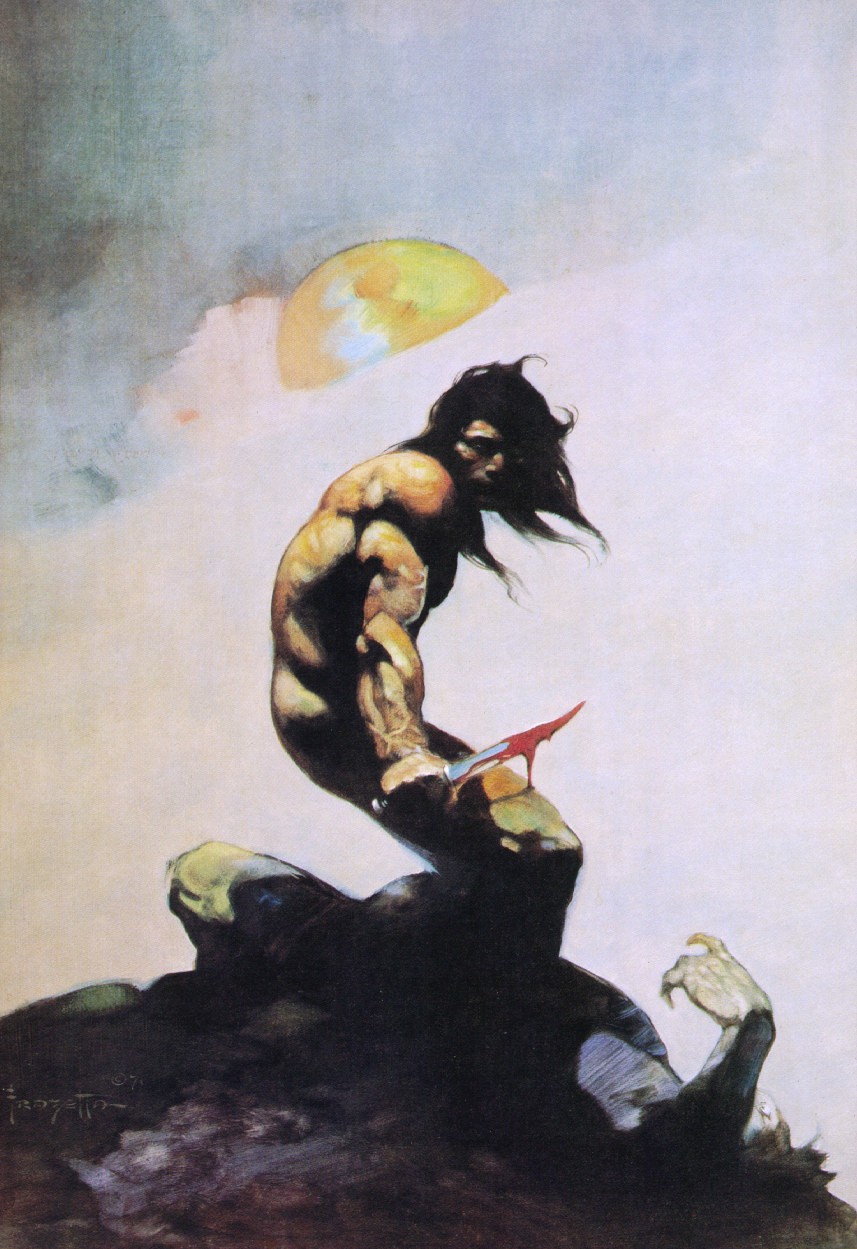
ACKS provides an appropriately open-ended description of the human nomad, leaving much to the DM's determination. In sandbox games like Cult of Aois this is preferable. The nomads I envision are jointly inspired by Howard's barbarian as well as mexican indian mythos. Rival nomad tribes war over resources and honor, but band together against the neanderthal threat. While men follow the herd, the neanderthal pursue men from caves. Neanderthal come for flesh, both as a breeding stock and as a food source.
Humanity's social elite rarely concern themselves with neanderthals. Living in decadent and crumbling castles they are safe from the threat for now. This elite is the extended family, court, and knights of the last king, consisting of 10% of the population. The king has been dead for over 100 years with no heir. But the scheming and vile grabs for the throne has torn the court into disorder. Many wars have been waged over the petty squabbles of noblemen with nomad blood.

Even behind castle walls, there are far more fel dramas than the occasional noble's infidelity or incest. House Halrys' patriarch is the un-living nephew of the past king. Patriarch Greln Halrys is a vampire who brings his brave men back from the grave with cursed miracles. Greln's living servants are enraptured because they believe him to be the first lord to cast off his humanity for godhood. There will be more on the vampires soon.
ACKS provides an appropriately open-ended description of the human nomad, leaving much to the DM's determination. In sandbox games like Cult of Aois this is preferable. The nomads I envision are jointly inspired by Howard's barbarian as well as mexican indian mythos. Rival nomad tribes war over resources and honor, but band together against the neanderthal threat. While men follow the herd, the neanderthal pursue men from caves. Neanderthal come for flesh, both as a breeding stock and as a food source.
Humanity's social elite rarely concern themselves with neanderthals. Living in decadent and crumbling castles they are safe from the threat for now. This elite is the extended family, court, and knights of the last king, consisting of 10% of the population. The king has been dead for over 100 years with no heir. But the scheming and vile grabs for the throne has torn the court into disorder. Many wars have been waged over the petty squabbles of noblemen with nomad blood.

Even behind castle walls, there are far more fel dramas than the occasional noble's infidelity or incest. House Halrys' patriarch is the un-living nephew of the past king. Patriarch Greln Halrys is a vampire who brings his brave men back from the grave with cursed miracles. Greln's living servants are enraptured because they believe him to be the first lord to cast off his humanity for godhood. There will be more on the vampires soon.
Caterpillar Elevators (Part II)
Read part 1 first.
Sylk Wyrms or "Dire Wyrms" (as they are called by surfacers) are ordinarily more docile than their nickname implies. These gigantic furry mollusks have earned the nickname, "Deep Mammoths" by the few lore-men who withdraw from ancient scrolls fantasies of the ancient cold. Mature wyrms even have powerful tusks which resemble those of the long-distant mammoth. Larvae wyrms are hairless, bone white, and translucent. From the egg they are about the size of a bull, and their tusks are barely pronounced.

By puberty the wyrm's tusks have grown up to a span of ten feet long. But wyrms with tusks those large are the very largest of their kind, about the size of a sperm whale. By middle age, the wyrm's hair is a ruddy red. In their eldest stages the wyrms outer flesh hardens into a gravelly and chitinous surface, and the hair turns black. Their saliva is a corrosive substance capable of breaking down stone, earth, and flesh. Though wyrm flesh is impervious, of course. In a spiral-screwing motion wyrms use their tusks and spittle to tunnel out suitable domains. Some claim that they can "swim" through the earth as fast as a man can run.

Typically wyrms nest in colonys as they are social creatures. Various glands allow the wyrm to weave a powerful acid-impervious thread. Gnomish artisans use this thread to make a superior weave the gnomes implement into everything from insulation to armor. Wyrms use these webs to make "nests" over high chasms ussually near moisture sources. Both male and female wyrms have tusks and can secrete the acidic saliva from birth. Female wyrms are typically 20% larger than males. Once a wyrm's hair has turned fully black it retreats from it's colony in an isolated pilgrimage until death.
What is a "Caterpillar Elevator"?
Answer: Deep gnomes with wyrm companions make use of the wyrm's ability to quickly zip up and down their thread-lines. Gnomish excavators grab a ride on the furry flank of their wyrm accomplices and in minutes have sped upwards to ore-rich caverns ordinarily hours of climbing away.
Sylk Wyrms or "Dire Wyrms" (as they are called by surfacers) are ordinarily more docile than their nickname implies. These gigantic furry mollusks have earned the nickname, "Deep Mammoths" by the few lore-men who withdraw from ancient scrolls fantasies of the ancient cold. Mature wyrms even have powerful tusks which resemble those of the long-distant mammoth. Larvae wyrms are hairless, bone white, and translucent. From the egg they are about the size of a bull, and their tusks are barely pronounced.

By puberty the wyrm's tusks have grown up to a span of ten feet long. But wyrms with tusks those large are the very largest of their kind, about the size of a sperm whale. By middle age, the wyrm's hair is a ruddy red. In their eldest stages the wyrms outer flesh hardens into a gravelly and chitinous surface, and the hair turns black. Their saliva is a corrosive substance capable of breaking down stone, earth, and flesh. Though wyrm flesh is impervious, of course. In a spiral-screwing motion wyrms use their tusks and spittle to tunnel out suitable domains. Some claim that they can "swim" through the earth as fast as a man can run.

Typically wyrms nest in colonys as they are social creatures. Various glands allow the wyrm to weave a powerful acid-impervious thread. Gnomish artisans use this thread to make a superior weave the gnomes implement into everything from insulation to armor. Wyrms use these webs to make "nests" over high chasms ussually near moisture sources. Both male and female wyrms have tusks and can secrete the acidic saliva from birth. Female wyrms are typically 20% larger than males. Once a wyrm's hair has turned fully black it retreats from it's colony in an isolated pilgrimage until death.
What is a "Caterpillar Elevator"?
Answer: Deep gnomes with wyrm companions make use of the wyrm's ability to quickly zip up and down their thread-lines. Gnomish excavators grab a ride on the furry flank of their wyrm accomplices and in minutes have sped upwards to ore-rich caverns ordinarily hours of climbing away.
Sunday, May 13, 2012
Caterpillar Elevators (Part I)
Gnomish cities (or "skitter dens") are woven of web and sculpted of wax beneath bioluminescent lichen in vast underground grottos. In Cult of Aois the "deep gnomes" are the lords of insects. The deep gnomes' mastery of insect-husbandry is peerless because gnomes are taught at a young age the art of placating and commanding dire bugs. Dire wyrms and dire bees willingly cooperate with gnomes because they all expect to benefit mutually. By residing in the same delve they offer their partners communal protection from would be predators. Additionally, the gnomish presence seems to offer an uncanny boon to colony productivity. Gnome inhabited skitter dens have more resilient bug-labor, finer wyrm-webs, and purer honey than would be found in the natural environment.
 Picture Link.
The bugs have long worshipped a bizarre pantheon. Since joining the gnomes they have steadily impressed the influence of their alien mysticism. Even the dead are offered to the brood -- skitter dens generally offer corpses (both bug and gnome) to it's hungry. As I'm writing this article, I'm realizing that the Dune vibe lingers still. Well, no matter. Gnomes are generally against burial or cremation, and believe salvation is easier found from inside the digestive tract of a 20-foot-long millipede. Skitter dens usually consist of two or three family lines, but it is not unusual for a gnome patriarch or matriarch to have several spouses and dozens of children each. If the players aren't too intimidated by the gnome's inhuman cohorts, they might be able to hire some rather valuable hirelings.
Read Part II.
The bugs have long worshipped a bizarre pantheon. Since joining the gnomes they have steadily impressed the influence of their alien mysticism. Even the dead are offered to the brood -- skitter dens generally offer corpses (both bug and gnome) to it's hungry. As I'm writing this article, I'm realizing that the Dune vibe lingers still. Well, no matter. Gnomes are generally against burial or cremation, and believe salvation is easier found from inside the digestive tract of a 20-foot-long millipede. Skitter dens usually consist of two or three family lines, but it is not unusual for a gnome patriarch or matriarch to have several spouses and dozens of children each. If the players aren't too intimidated by the gnome's inhuman cohorts, they might be able to hire some rather valuable hirelings.
Read Part II.
The Illithid Faction
Having multiple factions in a dungeon encourages the suspension of disbelief. NPC's from factions usually seem more organic and significant because their faction lends them purpose. The dungeon with factions in conflict feels less like a caricatured fun-house, and more like an environment with the potential for evolving conflicts and resolutions. With that said -- the Illithid or "mindflayer" faction is one of the first factions my players might be unfortunate enough to encounter in the Cult of Aois megadungeon.

As mindflayers have the tendency to be rather potent adversaries, the level 1 players will probably not encounter these monsters in our first few sessions. But it is likely that plenty of the mindflayer's minions will be an ever-looming threat. I'm placing such an emphasis on the Illithid because my aim is to craft the Cult of Aois as a sci fantasy megadungeon. I've been cooking up ideas for some sickening and depraved mindflayer thralls, and I will post more about these minions after our game tomorrow night.
Every faction has a goal. In Cult of Aois, the mindflayer faction seeks to infiltrate the dwarven capital. The illithids hope to harness the mythical dwarven "Runewright," an artifact which is believed to be able to re-open the illithid's now-dead portal to the "space realm." The illithid are an antediluvian race that was once guided by their patron deity across the stars. But their deity ascended eons ago, joining the ranks of the forgotten. Their god abandoned his people as all forgotten do. Since then, the illithid have brooded beneath the darkness of their "material realm"prison while cursing the name of the god who used then stranded them.

As mindflayers have the tendency to be rather potent adversaries, the level 1 players will probably not encounter these monsters in our first few sessions. But it is likely that plenty of the mindflayer's minions will be an ever-looming threat. I'm placing such an emphasis on the Illithid because my aim is to craft the Cult of Aois as a sci fantasy megadungeon. I've been cooking up ideas for some sickening and depraved mindflayer thralls, and I will post more about these minions after our game tomorrow night.
Every faction has a goal. In Cult of Aois, the mindflayer faction seeks to infiltrate the dwarven capital. The illithids hope to harness the mythical dwarven "Runewright," an artifact which is believed to be able to re-open the illithid's now-dead portal to the "space realm." The illithid are an antediluvian race that was once guided by their patron deity across the stars. But their deity ascended eons ago, joining the ranks of the forgotten. Their god abandoned his people as all forgotten do. Since then, the illithid have brooded beneath the darkness of their "material realm"prison while cursing the name of the god who used then stranded them.
Saturday, May 5, 2012
The Numen
Elves call them spirits, men call them demons, dwarves call them gods. The numinous forces of the standing races can be divided into two categories. The first group, called "The Forgotten" are the class of gods which no longer respond to the appeals of worshippers. These are entities so ascendant that even the power of prayer is of little concern to them. These gods are in an eternal political struggle with the other master powers. The Forgotten rarely manifest on the material plane, but send pawn lesser deity's if necessary.

Picture Link.
The second class of deity are are called "The Singers." These are the mouthpieces of faith and the architects of cults. These are the lesser gods who cringe before the greater gods. But it is the duty and the honor of the Singers to make men bow. Whether through service to the material plane or through its domination, The Singers are the forces that meddle in the affairs of elves, dwarves, and mortals. For a Singer to ascend, they must first enrapture the masses into prayer. The faith-force of the devout directly empowers a Singer. A cult's power grows with the deeds of deity's champions. As the masses are inspired, the deity feeds on their devotion with a dreadful gluttony.

Picture Link.
The second class of deity are are called "The Singers." These are the mouthpieces of faith and the architects of cults. These are the lesser gods who cringe before the greater gods. But it is the duty and the honor of the Singers to make men bow. Whether through service to the material plane or through its domination, The Singers are the forces that meddle in the affairs of elves, dwarves, and mortals. For a Singer to ascend, they must first enrapture the masses into prayer. The faith-force of the devout directly empowers a Singer. A cult's power grows with the deeds of deity's champions. As the masses are inspired, the deity feeds on their devotion with a dreadful gluttony.
Thursday, May 3, 2012
The Eldar
The elves in my home-brew are inspired by several sources, but Frank Herbert's Dune is the primary influence. The elves in my campaign are in the vein of Herbert's fremen; supreme survivors conditioned by the hell-blasted desert. They are mystic warriors who worship martial and magic cults. Though the aesthetic is certainly fremen, thats really as far as the similarities go. These elves worship magic as men worship gods. Males follow one cult, females the other. The elves were the first race to hear the whisperings of magic from the spirits. The eldar mother chose the cult of the *Nightblade. The son-father found the cult of the *Spellsword.
 Picture link.
The males are not fair elves, their flesh has taken the hue of the red sands, and been shaped by it too. In Dark Sun (I never played it) I heard that the elves stood taller than men, something around seven feet tall if my memory serves me. So too will the elves in my campaign stand seven feet tall. The male's ziggurats are antediluvian pyramid-fortresses where the brotherhood may hone their magics and their steel through monk-like meditative practices.
Underground the female cult extends it's shadowy grip of the underworld ever further into the depths. The spirits of both cults require an absolute separation between males and females except during procreation rituals. Though ancient, the elvish race faces decline. Males are particularly hesitant to participate in elvish consummation because to do so would be to sever the male elf's magic potential forever. The elf may no longer level as a Spellsword, and must instead level as a fighter. Though a different system, this male elf attitude is comparable to the male Giant Spider's attitude in Luke Crane's Burning Wheel.
For this reason males are taught to practice asceticism at a young age. The only woman some males ever encounter is their mother before they are taken and delivered to a surface ziggurat. Female elves follow a more martial path than the brotherhood. As they are dwellers in darkness, their flesh is a light grey, and fairer than the brotherhood's. The sisterhood's cult of deep spirits demand virtue through conquest. Vengeance is the spiritual absolution the sisterhood's ancient matriarchs glean like coins. Breathtaking natural caverns and grottos house the sisterhood. Through magic the natural chambers have been enchanted to be both luxuriant and deadly. Obviously I've drawn some inspiration from the Drow as well.
* The Nightblade is an ACKS class which is effectively a thief/magic-user multiclass for elves.
The Spellsword is an ACKS class which is effectively a fighter/ magic-user multiclass for elves.

The males are not fair elves, their flesh has taken the hue of the red sands, and been shaped by it too. In Dark Sun (I never played it) I heard that the elves stood taller than men, something around seven feet tall if my memory serves me. So too will the elves in my campaign stand seven feet tall. The male's ziggurats are antediluvian pyramid-fortresses where the brotherhood may hone their magics and their steel through monk-like meditative practices.
Underground the female cult extends it's shadowy grip of the underworld ever further into the depths. The spirits of both cults require an absolute separation between males and females except during procreation rituals. Though ancient, the elvish race faces decline. Males are particularly hesitant to participate in elvish consummation because to do so would be to sever the male elf's magic potential forever. The elf may no longer level as a Spellsword, and must instead level as a fighter. Though a different system, this male elf attitude is comparable to the male Giant Spider's attitude in Luke Crane's Burning Wheel.
For this reason males are taught to practice asceticism at a young age. The only woman some males ever encounter is their mother before they are taken and delivered to a surface ziggurat. Female elves follow a more martial path than the brotherhood. As they are dwellers in darkness, their flesh is a light grey, and fairer than the brotherhood's. The sisterhood's cult of deep spirits demand virtue through conquest. Vengeance is the spiritual absolution the sisterhood's ancient matriarchs glean like coins. Breathtaking natural caverns and grottos house the sisterhood. Through magic the natural chambers have been enchanted to be both luxuriant and deadly. Obviously I've drawn some inspiration from the Drow as well.
* The Nightblade is an ACKS class which is effectively a thief/magic-user multiclass for elves.
The Spellsword is an ACKS class which is effectively a fighter/ magic-user multiclass for elves.
Wednesday, May 2, 2012
Next Session
Intro:
Where are the gods? Elvish sorcerers meditate in ziggurats above a sand scarred desert. Only the desert rivals the elves' callousness. Dwarves dig grand tomb-cities like ants to stabilize their death cult "queen." Humans are the few, they are as weariless as they are desperate. The tribes of men must constantly war with each other and with the desert to compete for scarce resources. And stranger things still lie in the swamplands. The spirits are said to be restless there. But the spoils of dead kings are said to be there too, cursed though they be. But past the fetid wetlands great mountains are said to rise -- some taunting even the clouds. But who is to say what lies beyond?
Who are you?
I will be running a megadungeon using several sources, but primarily the ACKS. The dungeon will be partly of my own design and partly composed of borrowed modules. We all love a good dungeon crawl, but the evolving political component of ACKS is what we found most compelling. As a subterranean campaign, it will be highly likely that characters will build their fortresses far below the surface. This will be a tale of downwards progress.

Picture link.
Updates soon.
Where are the gods? Elvish sorcerers meditate in ziggurats above a sand scarred desert. Only the desert rivals the elves' callousness. Dwarves dig grand tomb-cities like ants to stabilize their death cult "queen." Humans are the few, they are as weariless as they are desperate. The tribes of men must constantly war with each other and with the desert to compete for scarce resources. And stranger things still lie in the swamplands. The spirits are said to be restless there. But the spoils of dead kings are said to be there too, cursed though they be. But past the fetid wetlands great mountains are said to rise -- some taunting even the clouds. But who is to say what lies beyond?
Who are you?
I will be running a megadungeon using several sources, but primarily the ACKS. The dungeon will be partly of my own design and partly composed of borrowed modules. We all love a good dungeon crawl, but the evolving political component of ACKS is what we found most compelling. As a subterranean campaign, it will be highly likely that characters will build their fortresses far below the surface. This will be a tale of downwards progress.

Picture link.
Updates soon.
Monday, April 30, 2012
Roll20 Live Stream
Read the first part here.
As I'm writing this article, I'm also watching the open live stream of Roll20 on Twitch.tv. But I'm not the only multi-tasker. Riley (GM) is running a 4e DnD session through Roll20 while he and his players answer the questions of onlookers in the twitch-chat. The ability to drop in images or hexed/tiled maps with such an assortment of malleable features really impresses me. There are health trackers, "auras," movable avatars, and a pen to scrawl on screen; all options to expedite the game pace. But as the Roll20 kickstarter suggests, the features never make the game feel like anything other than the pen and paper game it should be. The controls seem intuitive and quick to learn. Most of the text commands seem to be simple simulated die rolls. Music too is easy to implement and adjust as needed. Even if Roll20 doesn't make any major changes, it looks to be a rather impressive product.
As I'm writing this article, I'm also watching the open live stream of Roll20 on Twitch.tv. But I'm not the only multi-tasker. Riley (GM) is running a 4e DnD session through Roll20 while he and his players answer the questions of onlookers in the twitch-chat. The ability to drop in images or hexed/tiled maps with such an assortment of malleable features really impresses me. There are health trackers, "auras," movable avatars, and a pen to scrawl on screen; all options to expedite the game pace. But as the Roll20 kickstarter suggests, the features never make the game feel like anything other than the pen and paper game it should be. The controls seem intuitive and quick to learn. Most of the text commands seem to be simple simulated die rolls. Music too is easy to implement and adjust as needed. Even if Roll20 doesn't make any major changes, it looks to be a rather impressive product.
Subscribe to:
Posts (Atom)